

German citizenship
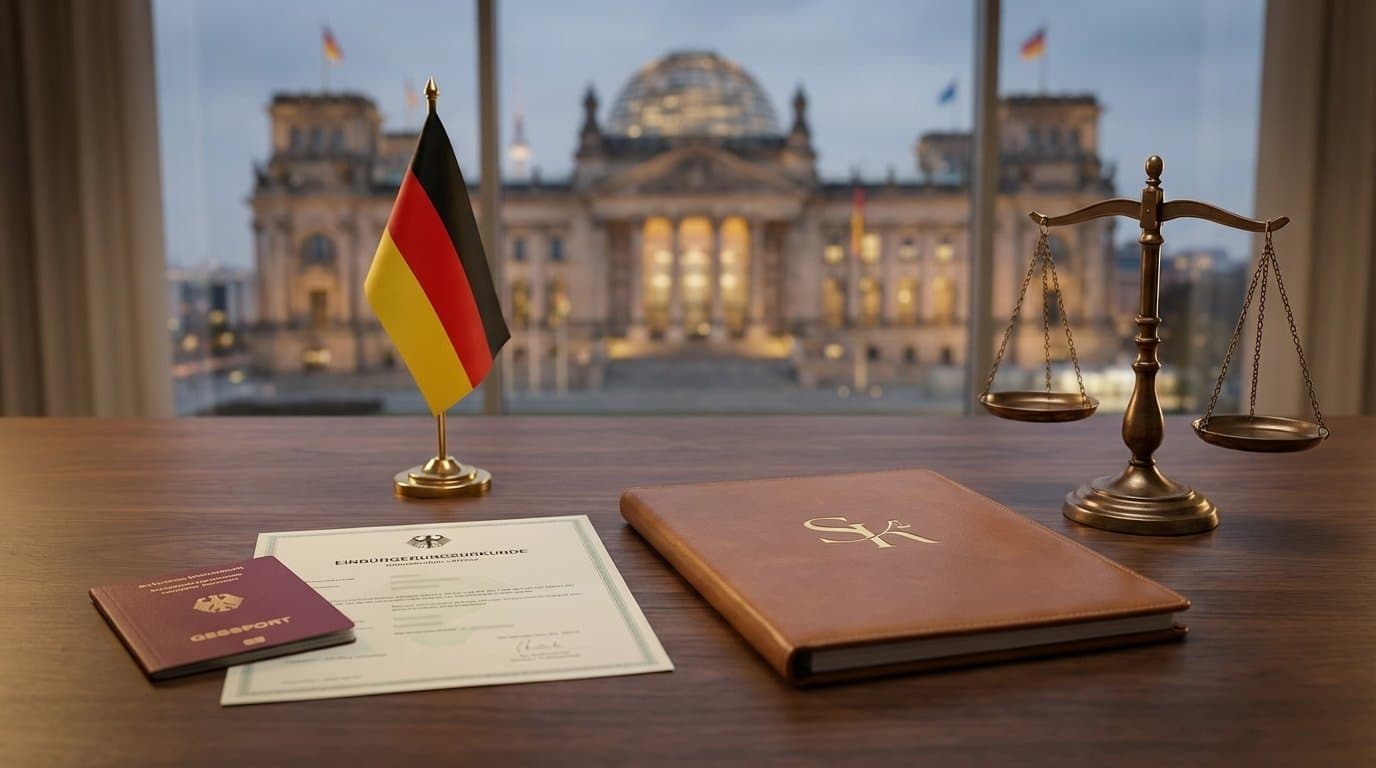
German Citizenship: Naturalization and Descent
German citizenship guarantees all the rights of an European Union citizen—free movement, the right to work in any country within the European Economic Area, and consular protection worldwide. For those residing in Germany or who have German ancestors, there are clear legal pathways to obtain it.
At the office Sandra Koelln Law & Associates, in Munich, we offer specialized legal advice for the entire process of obtaining German citizenship — from eligibility assessment to guidance with the competent authorities. We serve clients of all nationalities, with particular experience in assisting the Brazilian and Portuguese-speaking community.
German Citizenship by Naturalization (Einbürgerung)
Naturalization is the most common path for foreigners residing in Germany who wish to become German citizens. With the reform of the Nationality Act (Staatsangehörigkeitsgesetz), which has been in effect since June 2024, the requirements have been significantly updated.
Updated Requirements (2024 Law)
- Legal and habitual residence in Germany for at least 5 years (previously 8 years)
- In cases of exceptional integration (volunteer work, advanced language proficiency), the deadline may be reduced to 3 years.
- Proof of German language proficiency (B1 level or higher)
- Self-sufficiency, without dependence on social benefits
- Absence of relevant criminal record
- Passing the citizenship test (Einbürgerungstest) or having equivalent schooling in Germany
- Commitment to the values of the German Basic Law (Grundgesetz)
Dual Citizenship in Germany
One of the most significant changes of the 2024 reform was the General permission for dual citizenship. Previously, Germany required renunciation of original nationality in most cases. Now, foreigners can become naturalized German citizens. without giving up your original citizenship. For Brazilians, this change is particularly relevant, as Brazilian law also recognizes dual citizenship — eliminating any conflict between the two countries.
Our office handles the entire naturalization process, from gathering documentation to liaising with the Naturalization Authority, ensuring your application is submitted correctly and without any outstanding issues.
German Citizenship by Descent (Abstammung)
German citizenship can be passed down automatically from parent to child, regardless of the country of birth. This means that descendants of Germans anywhere in the world may be entitled to citizenship without ever having lived in Germany.
Who Is Eligible?
- Children of a father or mother with German citizenship (born after 01.01.1975)
- Children of a German father born before 1975 (historical patrilineal rule)
- Children of a German mother born between 1949 and 1974 can now claim citizenship through Wiedergutmachungseinbürgerung (reparatory naturalization).
- Descendants of those persecuted by the Nazi regime (Art. 116, para. 2, Basic Law)
- Grandchildren and great-grandchildren of German emigrants — depending on the chain of transmission
The Recognition Process
The recognition of citizenship by descent (Feststellung der deutschen Staatsangehörigkeit) requires documentary proof of the entire genealogical line back to the German ancestor. This includes birth, marriage, and death certificates, as well as documents proving the German nationality of the ancestor.
We operate in document research, guidance on sworn translations and apostilles, and direct communication with the Bundesverwaltungsamt (BVA) and German consulates abroad.
German Citizenship Law Reform (2024): Key Changes
The reform of the Nationality Law, in effect since June 27, 2024, has brought about the most significant changes to German nationality legislation in decades:
- Dual citizenship permitted without restrictions for all nationalities
- Residency period reduced from 8 to 5 years (3 years in special integration cases)
- Historical reparation: Children of German mothers born before 1975 and descendants of persecuted individuals have new paths of access
- Valued integration Social engagement, volunteering, and language proficiency can accelerate the process.
Our office monitors all legislative updates and advises each client on the most suitable course for their specific case.