




Child support in Germany (Kindesunterhalt)
In Germany, the obligation to pay child support—called Child support — exists independently of whether the couple was married or not. The value is calculated based on the Düsseldorf Table, an annually updated national reference table that considers the income of the obligated parent and the child's age range.
Payment is monthly and is a legal obligation. Non-payment is not just a financial problem—it has direct legal consequences.
What happens when the other parent doesn't pay?
When payments stop, the single parent faces two simultaneous problems: financial and bureaucratic.
The German state offers a support mechanism called maintenance advance — a public advance paid by the Youth Welfare Office (Child Protection Service). This amount covers part of what the absent parent should pay, but it generally doesn't correspond to the total the child is legally entitled to.
The current values in 2025 are:
- 0 to 5 years €230/month
- 6 to 11 years old: €301/month
- 12 to 17 years old $395/month
These amounts are a minimum floor—they do not prevent you from legally claiming the full amount based on the Düsseldorfer Tabelle.
An important detail: the debt doesn't disappear
Even in cases where the debtor is arrested for failure to pay alimony — which is legally possible in Germany — the debt continues to exist and accumulate. Detention is a coercive measure to force payment, not a settlement of the debt. This means that outstanding amounts can be collected later, including with interest.
The current debate: why are single mothers asking for more?
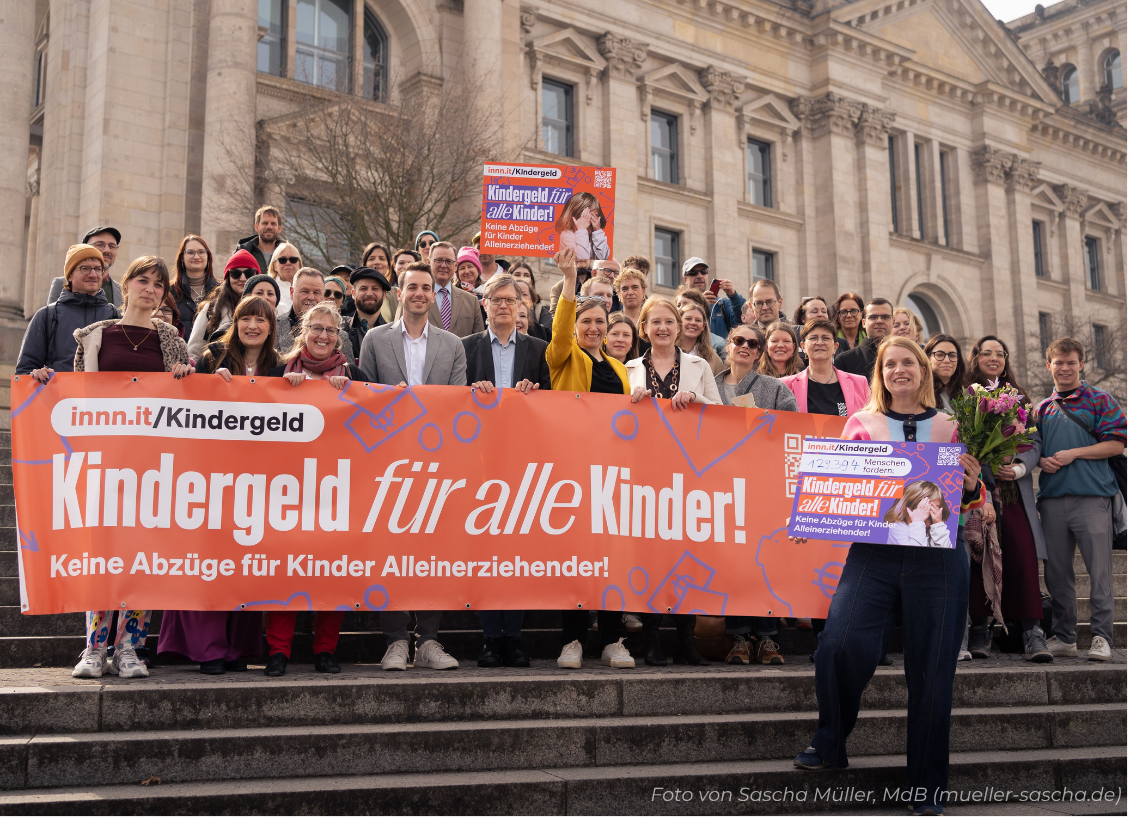
The petition submitted to the Bundestag questions precisely this gap: the state advance does not replace what the other parent is legally obligated to pay, and the legal process to collect this amount is long and exhausting.
In Parliament, the debate divides opinions. Left-wing female deputies—some of them single mothers by personal experience—advocate for harsher penalties for those who fail to pay, arguing that child support non-payment is a form of financial violence. Meanwhile, center-right parliamentarians emphasize strengthening state support as the priority path.
No law has been passed yet, but the topic is on the agenda and political pressure is growing.
What is legally possible?
If the other parent doesn't pay child support, there are concrete legal avenues:
Obtain an enforcement order (Unterhaltstitel) To bring a case before the court, you need an enforceable title — an approved agreement, a court ruling, or a notarized public deed. Without this document, it's impossible to initiate a forced execution.
Forced execution (Zwangsvollstreckung) With the title in hand, it is possible to take the debtor to court to seize their salary, bank account, or other assets. The judge can order the employer to withhold the amount directly from the paycheck.
3. Collection of overdue amounts Unpaid alimony can be collected retroactively, as a rule, up to one year before the date of the formal request. Therefore, the sooner the lawsuit is initiated, the better.
4. Debtor parent lives outside Germany - including in Brazil When the parent who owes child support resides in another country, the process is more complex, but not impossible. There are international agreements and legal cooperation mechanisms that allow for the collection of child support abroad. This is a case that requires specialized legal guidance from the outset.
When to seek legal counsel
Legal guidance is indispensable in the following cases:
- The other parent stopped paying and you don't have an enforceable order yet.
- You need to calculate the correct amount based on the Düsseldorfer Table.
- The parent owing child support lives outside of Germany, including in Brazil.
- The pension agreement was made informally and has no legal validity for enforcement.
- The combined amount no longer reflects the debtor's current income and you want to review it
How can the Koelln Office help
Dr. Sandra Koelln is a lawyer admitted to the OAB (Brazil), the RAK München, and the Portuguese Bar Association, practicing International Family Law in Munich.
The office assists Brazilian and Lusophone families in Germany with child support, international child custody, and divorce cases — in Portuguese and German, with direct knowledge of the German legal system.

This article is for informational purposes only and does not constitute legal advice. For an analysis of your specific case, consult a lawyer.