Portuguese Citizenship

  • Portuguese Citizenship
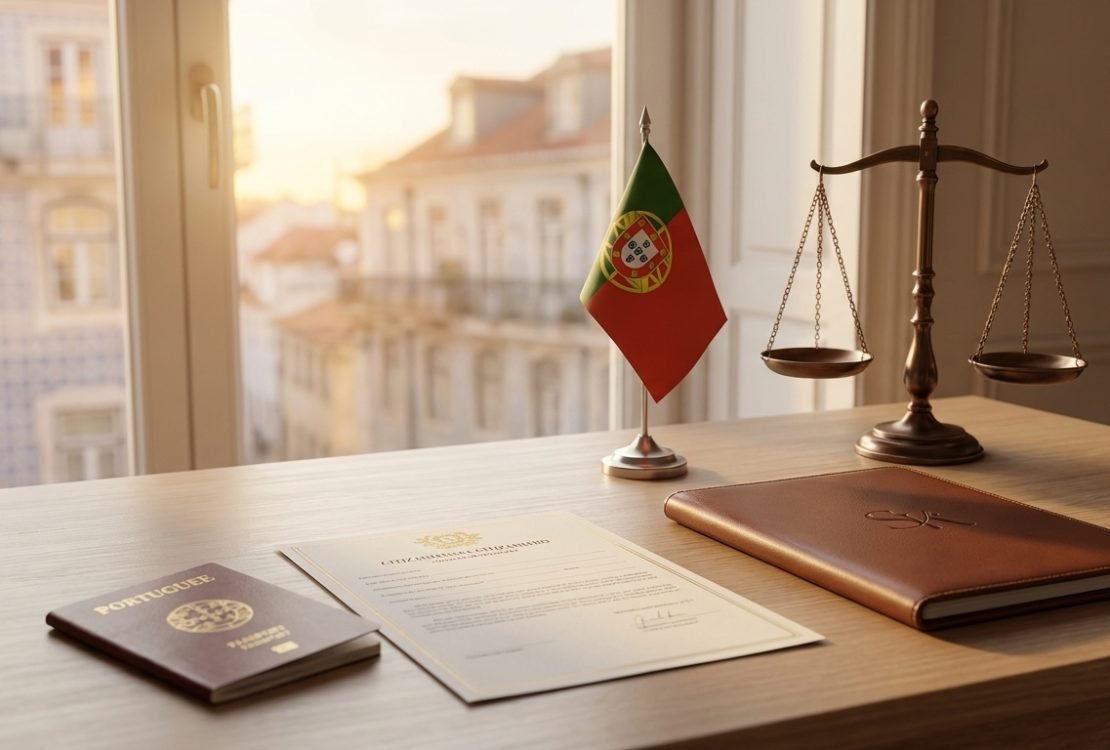
Mesa jurídica com bandeira de Portugal representando cidadania portuguesa

Portuguese Citizenship: Descent, Naturalization and Processes

Portuguese citizenship grants all the rights of a European Union citizen, including freedom of movement, residence, and work in any country within the European Economic Area. For descendants of Portuguese nationals, spouses of Portuguese citizens, or long-term residents, Portuguese law offers various pathways to acquire nationality.

Dr. Sandra Koelln is registered with Ordem dos Advogados de Portugal (Coimbra), which allows direct action before Portuguese authorities — Conservatórias, IRN (Institute of Registries and Notary) and courts — without the need to subcontract a local lawyer.

Ways to obtain Portuguese citizenship

1. By Descent (Assignment and Acquisition)

Portuguese law provides for different regimes depending on the degree of kinship:

  • Children of Portuguese citizens citizenship granted automatically, regardless of country of birth
  • Grandchildren of Portuguese can acquire citizenship by demonstrating effective ties to the Portuguese community (knowledge of the language, regular visits, active family ties)
  • Great-grandchildren and later generations: can have access through the chain of acquisition (first the grandchild acquires, then the great-grandchild requests as a child of Portuguese)
2. For Marriage or De Facto Union

Spouses of Portuguese citizens can acquire nationality after 3 years of marriage (or recognized de facto union). The process requires a joint declaration and proof of the bond.

3. By Naturalization

Foreigners who have been legally resident in Portugal for at least 5 years and demonstrate sufficient command of Portuguese can apply for naturalization. The absence of serious convictions and effective ties to the community are also assessed.

4. Sephardic Community

Descendants of Portuguese Sephardic Jews can apply for citizenship under a special regime by demonstrating historical ties to the Portuguese Sephardic community. Following legislative changes in 2024, new requirements have been introduced, including the demonstration of effective ties to Portugal.

Required documentation

The documentation varies according to the route chosen, but generally includes:

  • Birth, marriage and death certificates (of the applicant and ascendants)
  • Translated and apostilled documents (Hague Apostille)
  • Proof of residence or link to Portugal
  • Criminal record certificate
  • For grandchildren: proof of effective ties with the Portuguese community

Our office advises on all the documentation, checks the completeness of the dossiers and accompanies the applications to the IRN and the Registry Offices.

Frequently Asked Questions

Children of Portuguese citizens have automatic entitlement. Grandchildren can acquire it by demonstrating effective ties with Portugal. Spouses of Portuguese nationals can apply for naturalization after 3 years of marriage. Residents for 5+ years can naturalize.

Yes, Portugal allows dual citizenship without restrictions. This applies to Brazilians, Mozambicans, Angolans, Cape Verdeans and any other nationality. It is not necessary to renounce your original citizenship.

The timeframe varies depending on the type of application and the demand at the IRN. Applications for direct descendants (children) usually take between 6 and 12 months. Applications for grandchildren can take between 12 and 24 months, depending on proof of effective ties.

For naturalization (5 years of residency), yes — sufficient knowledge of the language is required. For citizenship by descent (children and grandchildren), fluency in Portuguese may be assessed as part of effective ties to the community, but it is not a mandatory formal requirement.